Spotted: couples arriving with beautifully designed timelines saved from Pinterest, and absolutely no idea why they won’t work in Dubrovnik.
Welcome back to Aisle Adventures by DE.
After talking about trends and how they translate into real planning, it feels natural to move on to one of the most important (and most misunderstood) parts of a destination wedding: the timeline.
In Dubrovnik, timelines are never just about order or aesthetics. They are shaped by the environment itself. This is why building a thoughtful Dubrovnik wedding timeline is one of the most important planning decisions couples will make.
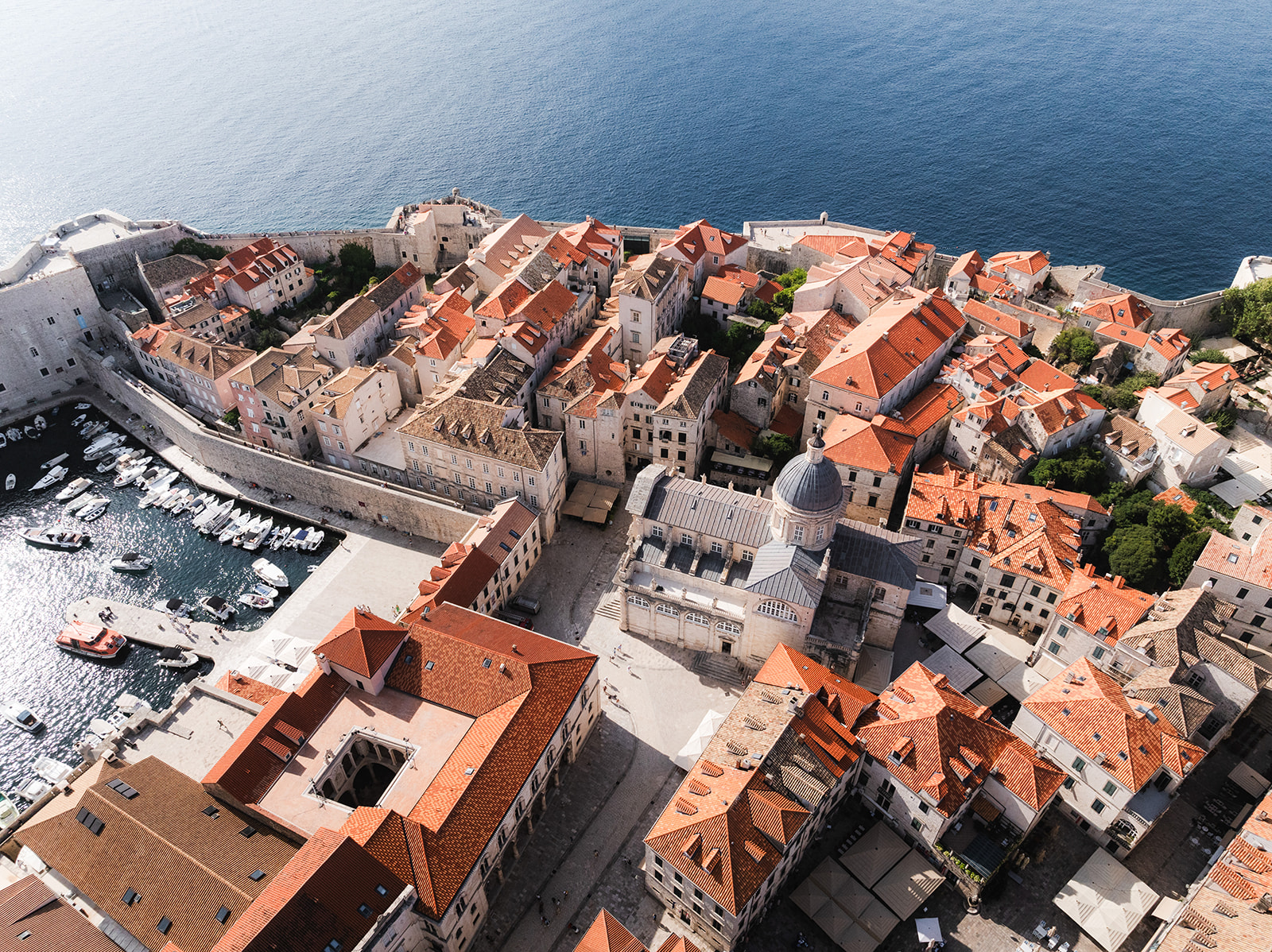
photo: DT Studio
Why Dubrovnik Wedding Timelines Are Different
Dubrovnik weddings don’t unfold inside a neutral, controlled setting. They take place in a living city, shaped by light, heat, history, and constant movement, and that context changes how a wedding day needs to be structured from the very beginning.
Here, a timeline isn’t simply a schedule of events. It’s a response to the surroundings.
Natural light determines when moments feel soft or harsh, while summer temperatures affect guest comfort and attention. Access restrictions in historic areas influence how people move and how long transitions actually take, and even evening pacing is shaped by the city’s rhythm and local regulations.
A timeline that works beautifully somewhere else can easily feel rushed, uncomfortable, or exhausting here. That’s why we never copy timelines. We build them from the ground up.
-
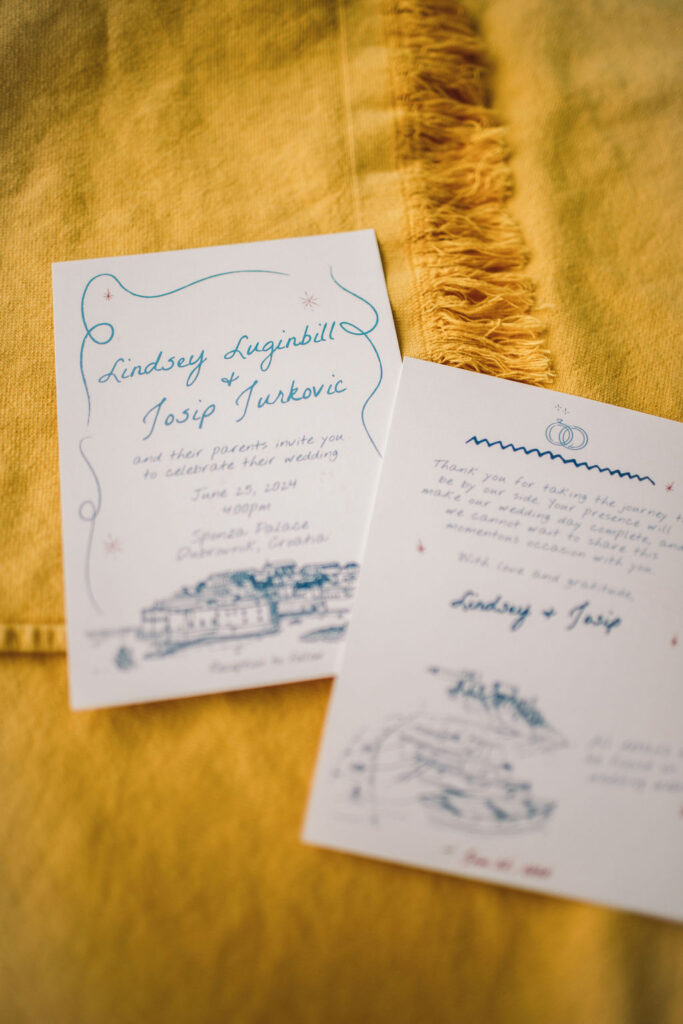
- photo: Alyssa Mcelheny
-
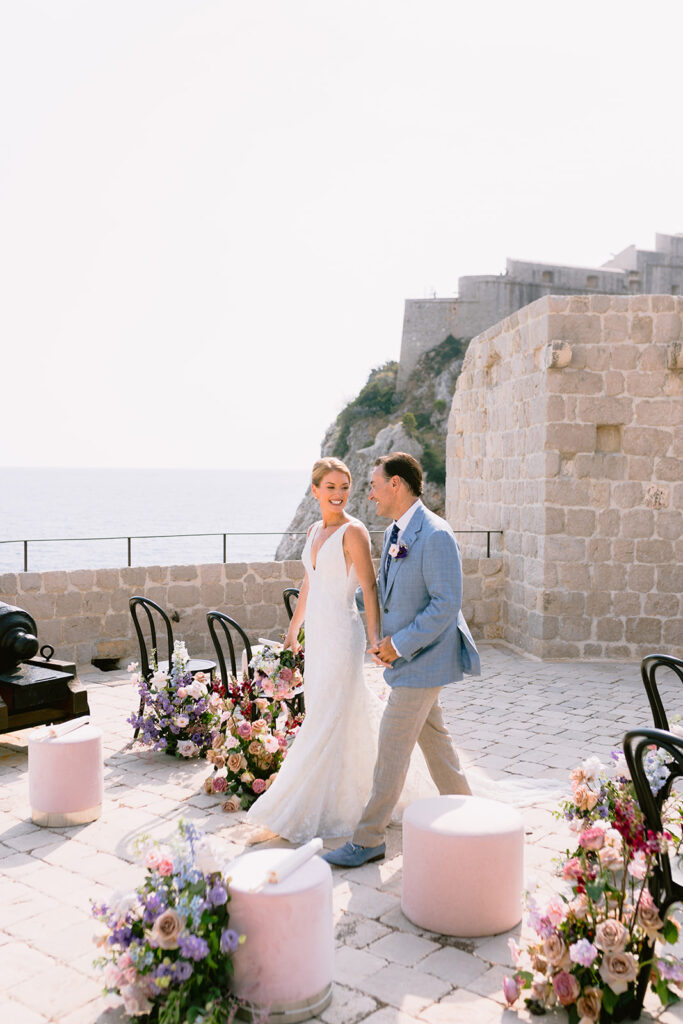
- photo: DT Studio
-
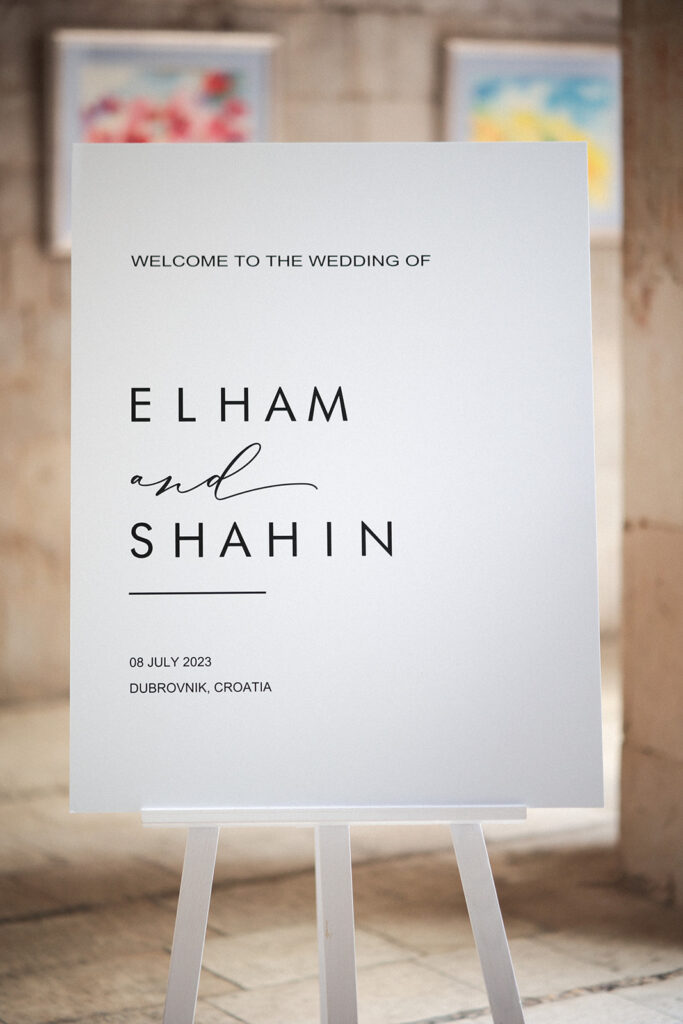
- photo: Mihoci Studios
Where Most Pinterest Timelines Go Wrong
The issue we see most often is compression.
Pinterest timelines tend to assume ideal conditions. Moments are stacked closely together, transition times are treated as negligible, and guest recovery time is rarely factored in. Everything looks efficient and polished on paper, but it leaves no room for reality.
In Dubrovnik, this almost always results in guests arriving overheated, vendors working under pressure, and moments losing their emotional impact because they feel hurried. Even when nothing goes visibly wrong, the day can feel slightly off, as though it’s constantly catching up with itself.
A wedding day should feel like it’s unfolding naturally, not being actively managed from one moment to the next. When a timeline is too tight, everyone senses it.
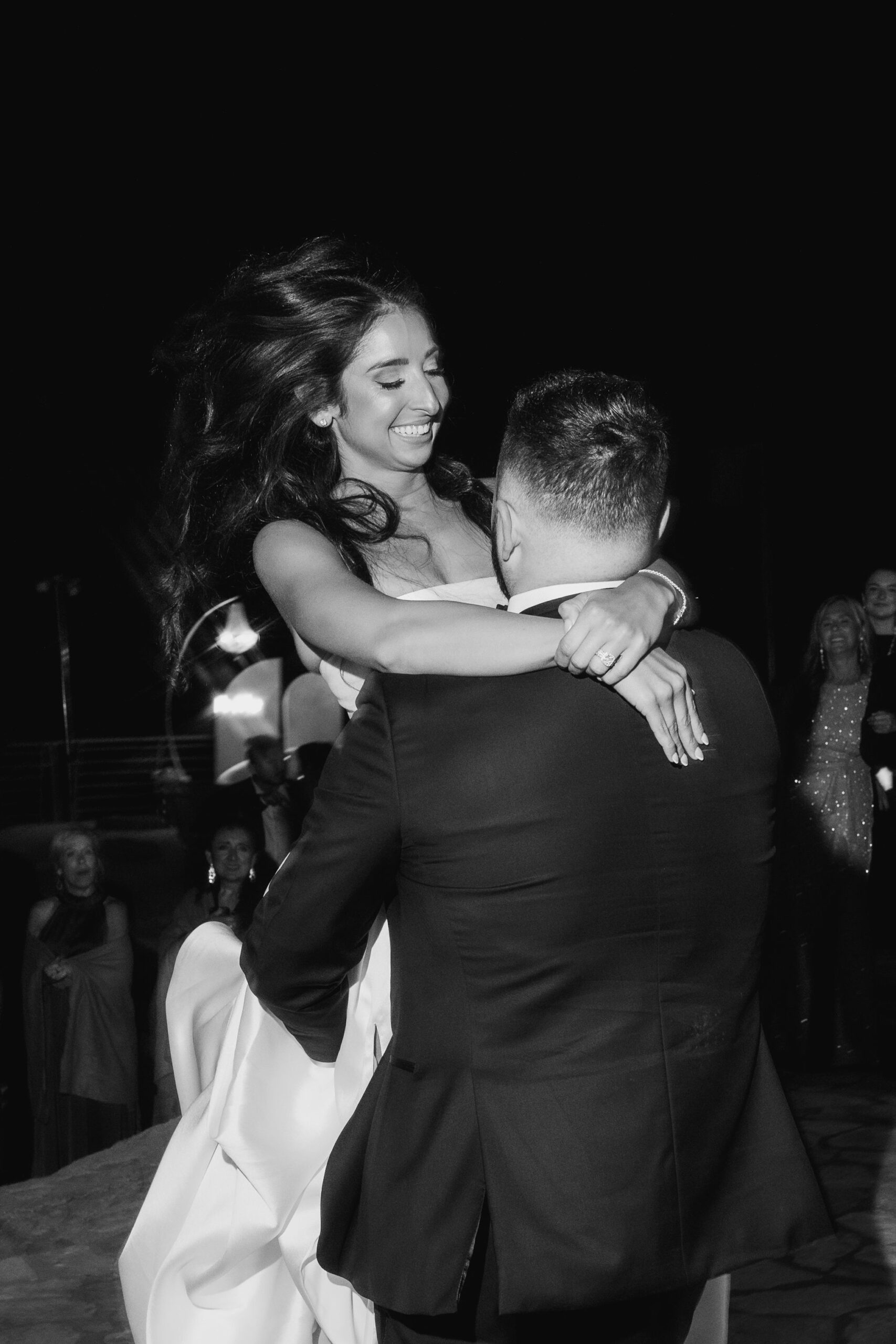
photo: Martina Škrobot
How We Actually Build a Dubrovnik Wedding Timeline
When we begin creating a timeline, we don’t start with the ceremony time. We start by imagining the experience of the day.
We look at when guests will feel most comfortable, how energy will move throughout the day, and when the environment will support the atmosphere rather than work against it. We think about how people will move between locations, where the day needs to slow down, and where it can gently build momentum.
Only after that do we begin placing key moments.
In Dubrovnik, timelines are often built backwards. We consider sunset times, expected temperatures at different hours, the physical paths guests will take, and local regulations that shape the evening. Once those elements are understood, the structure of the day becomes much clearer. This is where imported timelines usually fail, and where local expertise becomes essential. This approach ensures the Dubrovnik wedding timeline supports comfort, flow, and guest experience rather than working against them.
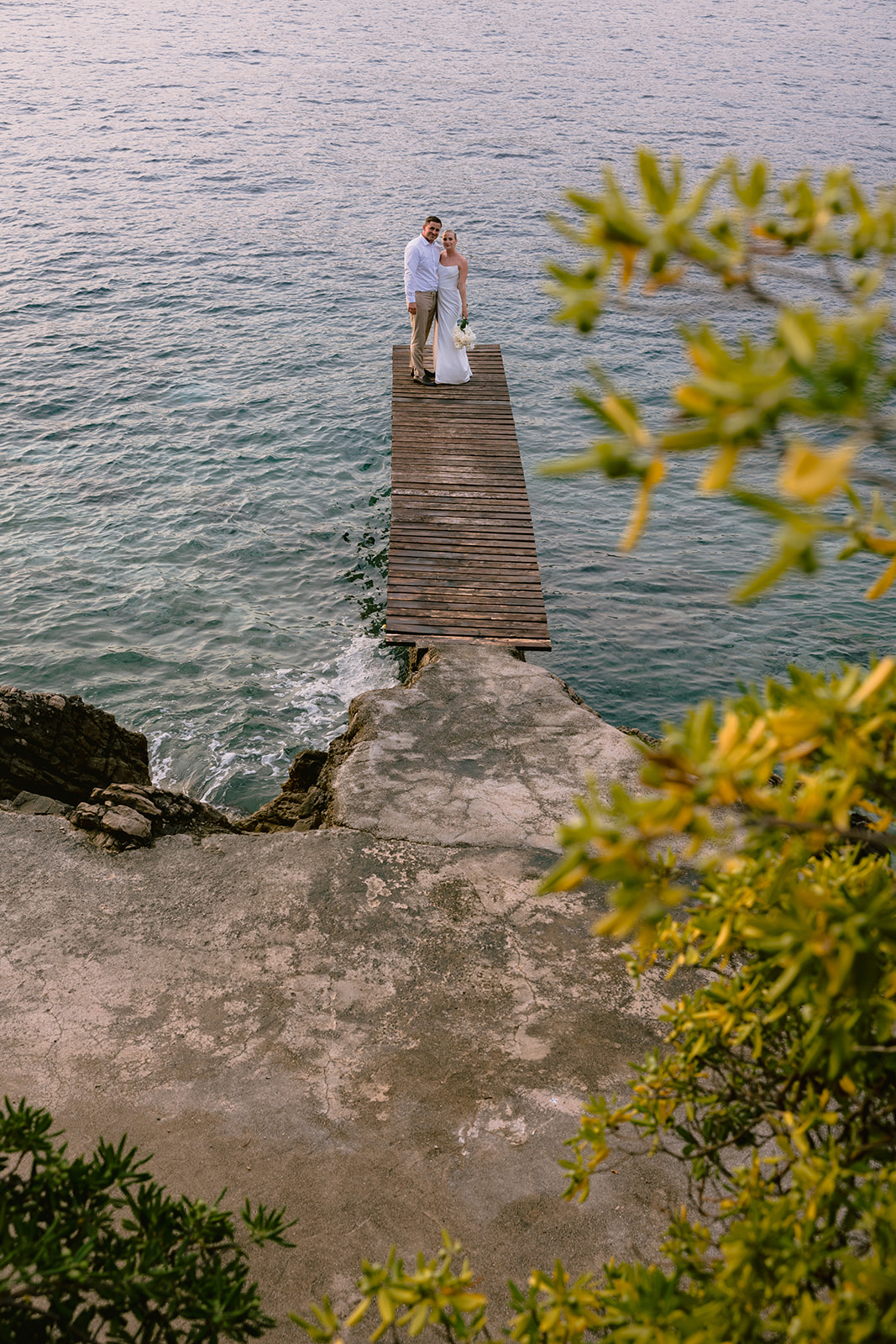
photo: DT Studio
Light Comes First (Always)
Light is one of the most powerful planning tools in Dubrovnik, and one of the easiest to underestimate.
From late spring through early autumn, ceremonies scheduled too early in the day simply don’t work. As planners, we rarely recommend anything before 4 PM, and in late July and August, 5 PM is often ideal. Earlier than that, the heat becomes overwhelming, guests struggle to stay comfortable, and even the most beautiful setting can feel unforgiving.
These times aren’t chosen arbitrarily. They allow us to avoid peak heat, work with softer, more flattering light, and create a calm transition into the evening. There is still plenty of time afterward for cocktail hour, dinner, and celebration, without asking guests to endure the most demanding part of the day.
When the light is right, everything else tends to fall into place more easily.


Why Transition Time Is Sacred
One of the clearest differences between a rushed wedding and a relaxed one is how transitions are handled.
In Dubrovnik, movement takes time, whether guests are navigating historic streets, stairs, or short distances that feel much longer in summer heat. This is why transitions are never treated as filler. They are an essential part of the day’s rhythm.
Building in space allows guests to move comfortably, reset between moments, and arrive fully present. When transitions are rushed or underestimated, stress appears quietly but quickly. The weddings that feel the most effortless are almost always the ones where movement has been anticipated and paced realistically.
The Role of Cocktail Hour and Dinner in the Timeline
After the ceremony, about an hour of cocktail time works best. It gives guests the chance to cool down, enjoy a drink, and settle into the next phase of the day. When this window stretches much longer, the energy often disperses, and guests begin to lose a sense of what’s coming next.
Dinner plays a very different role. It isn’t a pause in the celebration, but the anchor that grounds the entire day.
In Dubrovnik, dinner is where guests reconnect, energy resets, and the tone for the evening is established. This is why we’re careful not to rush it or overload it with interruptions. When dinner flows naturally, the celebration that follows feels effortless rather than forced.
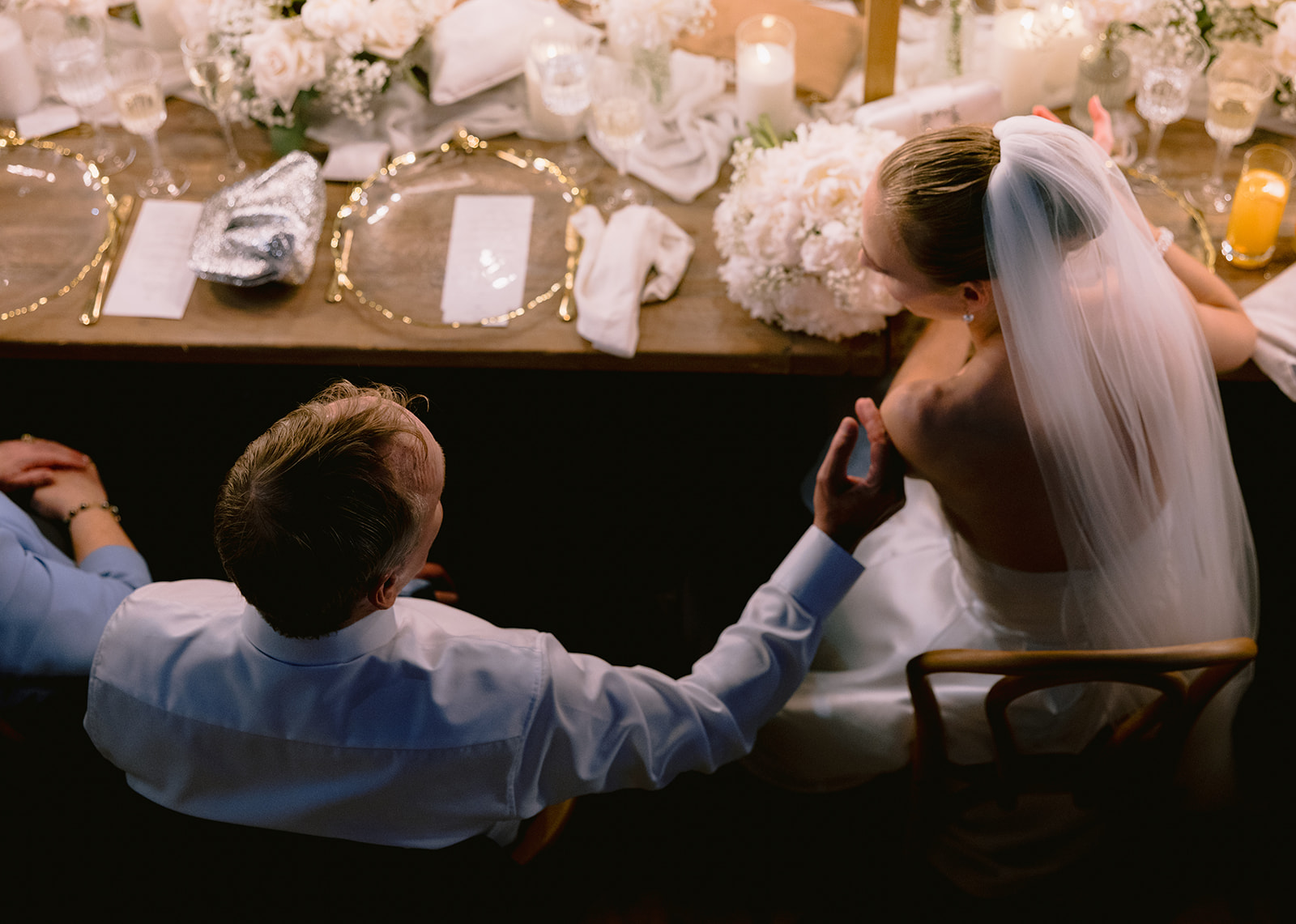
photo: DT Studio
What a Timeline Built for Dubrovnik Actually Prioritizes
When we say that Dubrovnik timelines are built from scratch, we’re not talking about creativity for its own sake. We’re talking about prioritization.
In practice, this means that certain elements always come before others. Guest comfort comes before tradition. Environmental realities come before aesthetic preferences. Flow comes before fitting everything in.
Ceremony length is planned with heat and attention span in mind, not just symbolism. Cocktail hour is designed to cool guests down and reconnect them, not to fill time while waiting. Dinner timing is chosen to anchor the day and restore energy, rather than being treated as something to move through quickly.
Most importantly, movement is planned as part of the experience, not an afterthought. In Dubrovnik, how guests get from one place to another directly affects how they feel when they arrive. A timeline that respects this creates a sense of ease that guests may not consciously notice, but always remember.
This is the difference between a timeline that looks good on paper and one that feels good on the day. A well-designed Dubrovnik wedding timeline rarely draws attention to itself, but it shapes how the entire day is experienced.
As weddings continue to become more relaxed and experience-focused in 2026, timelines matter more than ever. Rather than borrowing schedules from other destinations, it’s important to respect the environment, slow down moments that matter, and trust that a timeline built specifically for Dubrovnik will always feel better than one imported from elsewhere.
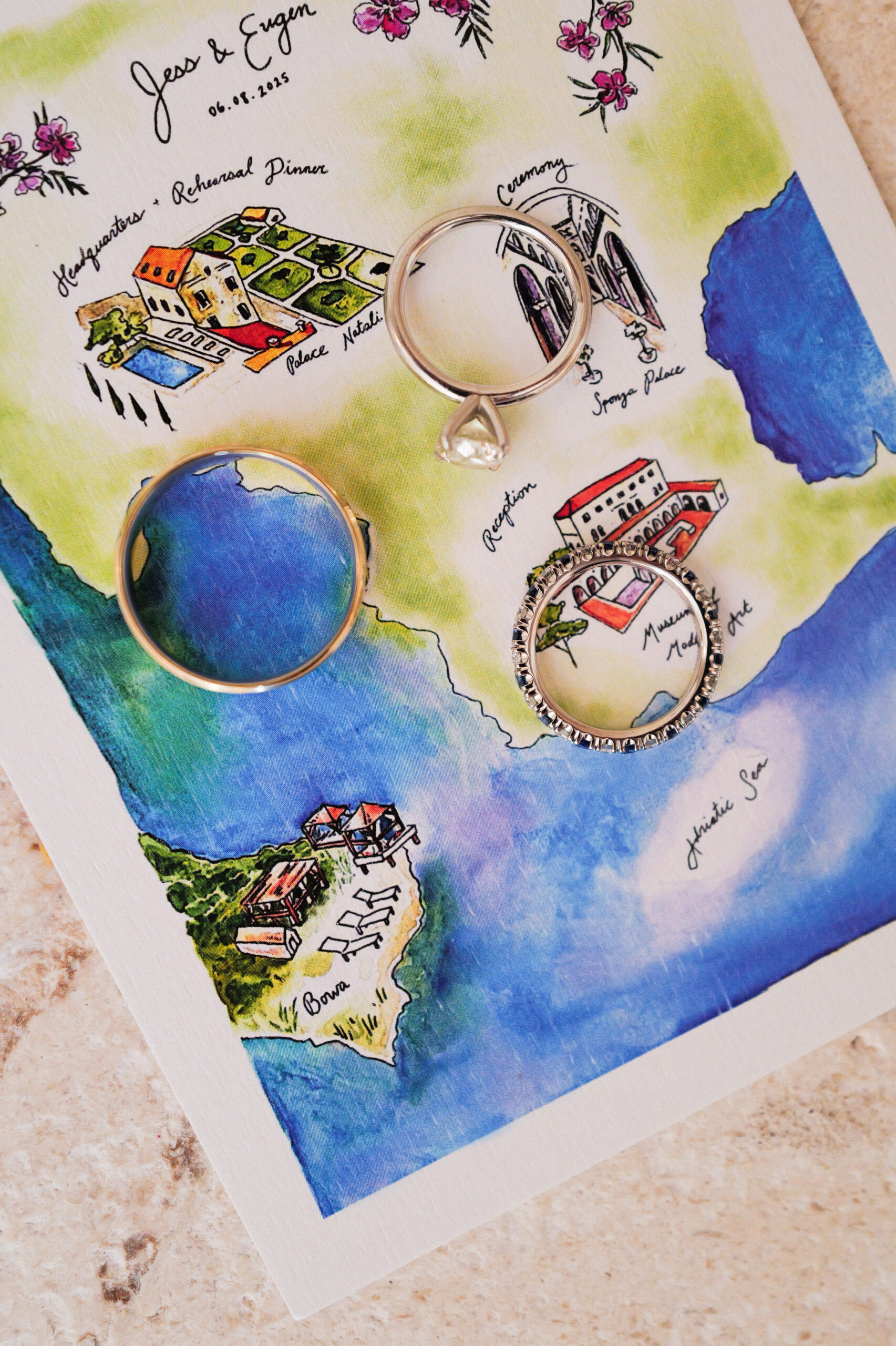
photo: Mihoci Studios
A good timeline is invisible.
When it’s done well, guests feel present, moments unfold naturally, and the day moves with ease. No one is watching the clock, which is exactly how it should be.
Next on Aisle Adventures:
Guest experience in Dubrovnik and the small planning choices that make a big difference.
XOXO,
Dubrovnik Event

